

Why Leaving Hospital is Not Always the End of the Risk
Leaving the hospital doesn’t necessarily mean every risk has disappeared. Often, it means hospital discharge isn’t where risk ends, but where it changes location, ownership, and visibility. Risk management responsibility shifts to the home and community support system, where several services must work together.
For people with multiple needs in complex situations, the biggest risk may be not having a home to return to, or having a family home but not the right support in place. Even when housing isn’t the issue itself, the property and environment might be unsuitable, inaccessible, not appropriately adapted, or lacking sensory considerations, which makes complex care hard to deliver adequately. If housing is insecure, far from familiar networks, or tied too closely to one care arrangement, care difficulties can quickly become a housing crisis too.
Without consistent support, monitoring, and a clear escalation plan, risks include unclear medication changes, delayed equipment, unconfirmed community referrals, staff lacking the necessary skills, family members expected to cover gaps in professional support, and changes in physical and mental health, behaviour, or emotional wellbeing.
When Discharge Risks Become Personal
For Rylee, these hidden risks were not just a phase. He remained in hospital while waiting for a provider able to understand and meet his needs, all while hoping for a life beyond its walls. During this uncertain period, our Senior Registered Manager met with Rylee and completed a thorough assessment—not only to understand his immediate requirements, but to explore what reliable, well-matched support could make possible for his future and independence.
When we first met Rylee, he was still living with the effects of trauma connected to a hospitalisation that had marked a particularly difficult chapter in his life. As our registered manager recalls:
“When he first came to us, he was actually in a hospital and had been there for some time whilst he was waiting for a provider… It had gone horribly wrong for him, which has now impacted on him having almost trauma from that placement. So, for where we are now with Rylee, it’s amazing. When he first came, he had incidents every single day. And, you know, over the three-month period now, you know, we probably get an incident a week, which is an amazing achievement.”
The relationship between housing and support works in both directions. Knowing how challenging things can get, Leaf Complex Care actively looks for ways to help people who require complex care live in a home-like environment and find a well-matched home that fulfils their health and social needs and life goals. Therefore, we partnered with CHD Housing and now offer tailored properties in the Midlands and develop new supported living accommodations for autistic people, people with a learning disability, mental health needs, complex care, eating disorders and people who need Positive Behaviour Support, where needed across the UK.
Explore more about how, by working together, we create the ideal home environment.
The Post-Discharge Period: A Window of Vulnerability
For people who require complex care, discharge can therefore create a temporary, but sometimes prolonged, window of vulnerability. The window remains open until the person’s health, housing, medication, equipment, care team and escalation arrangements are demonstrably stable.
Importantly, there is no universal window, just different risks that can peak at different times. This post-discharge period is considered as dangerous, and you are asking yourself why? Here, we provide five different reasons:
- “Clinically ready” does not mean recovered. A person can be ready to leave because they no longer require treatment that can only be delivered in hospital. They may still be physically weak, cognitively affected, emotionally distressed or dependent on skilled support.
- Continuous observation stops abruptly. In hospital, deterioration may be detected through observations, ward rounds and clinical monitoring. At home, recognition may depend on the person, a relative or a visiting support worker.
- Handover failures become real-world harm. Discharge transfers responsibility between hospital teams, GPs, community nurses, social care providers, housing organisations and families. A plan may look complete even though individual care services have understood it differently.
- Missing follow-up can start a chain reaction. NHS expects people requiring formal support to receive a holistic safety and welfare check on the day they return home. It also recommends active support during the first 48 hours, including settle-in support, medication, equipment, and clear safety-netting information.
- Mental-health risk can intensify after leaving. The first weeks after mental-health inpatient care are especially sensitive and can carry a heightened risk to life, particularly during the first two weeks.
Read more about post-discharge support and what people need once they leave inpatient care.
Hidden Clinical Risks After Discharge
Clinical stability at the point of discharge does not mean a person has returned to their previous level of health or independence. Medication changes, reduced mobility and the effects of illness or hospitalisation can create risks that only become apparent once the person is back in their own home and expected to resume everyday routines.
Medication Errors and Adverse Drug Events
Hospital admission commonly changes a person’s medication, dosage or administration routine. Risk arises when the person, family, GP or care team does not receive clear and consistent information about:
- What has started, stopped or changed.
- Why the change was made.
- Who will administer the medication.
- Whether staff are trained and competent.
- What monitoring or follow-up is required.
- What to do if doses are missed or side effects appear.
A 2025 HSSIB investigation followed a person who received no insulin for 15 days after discharge because hospital and community teams understood his support needs differently. Multiple electronic record systems did not communicate, and he was eventually readmitted.
Falls, Deconditioning and Functional Decline
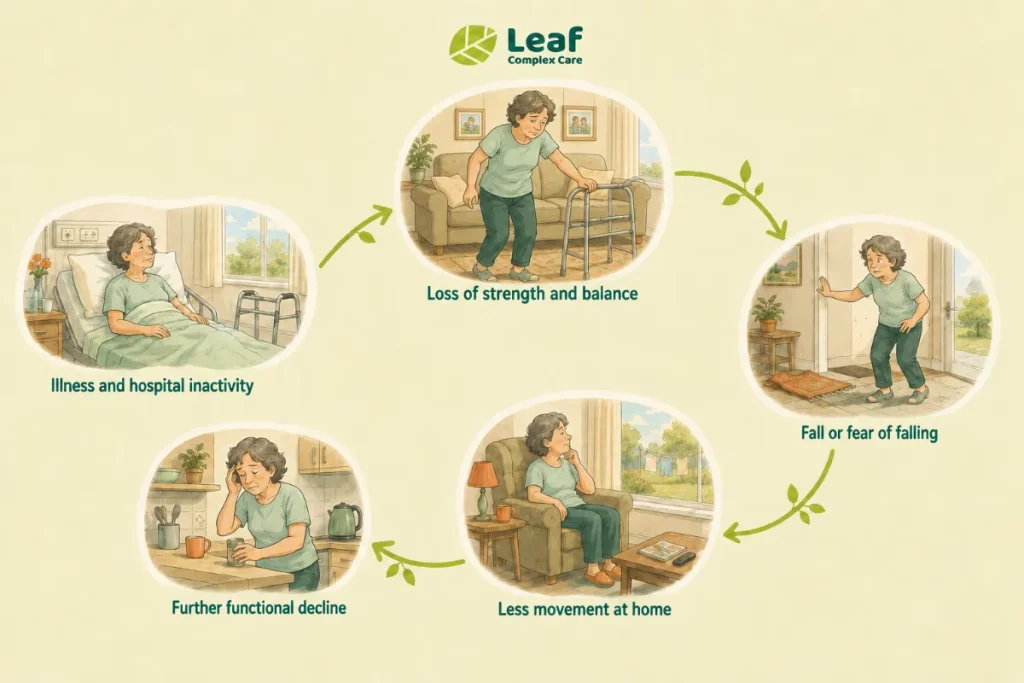
A fall may happen at home, but the conditions that make it likely can develop during hospitalisation and remain undetected at discharge. Illness, bed rest, poor nutrition, disrupted sleep and reduced activity can leave a person substantially weaker than before admission. If that new functional baseline is not recognised, or the home, equipment, and care package are based on their former abilities, the discharge can be medically appropriate but functionally unsafe.
Deconditioning means loss of strength, stamina, balance and physical or psychological capacity following illness and inactivity. Functional decline is when the ability to walk, use chairs, transfer, wash, dress, prepare food, use the toilet, or manage daily routines is visibly reduced. Falls can result from weakness, poor balance, fatigue, unfamiliar equipment, medication effects, or an unadapted environment.
Communication and Coordination Gaps
Communication and coordination gaps can turn an apparently successful discharge into an unsafe transition. An unclear follow-up request or a care plan that never reaches community, social-care or housing services can leave essential needs unmet. Unpaid carers may then become the default coordinators of complex care without adequate information, training or support. The danger is not simply that a document is late: it is that nobody notices the action it contained, or should have contained, until the person deteriorates or returns to hospital.
Incomplete or Delayed Discharge Information
A discharge is not safe merely because information has been sent. The handover is complete only when accurate information reaches the right people, is understood, responsibilities are agreed and the necessary actions are completed. The hospital discharge process summary connects hospital treatment with GP, pharmacy, community nursing, social care, housing and unpaid-carer support. If it is late, incomplete, inaccurate or sent to only some of those involved, essential care can quietly disappear between services.
The principal hidden risks are:
- Out-of-date plans
- Unequal access
- Ambiguous responsibility
- Missed follow-up care
- Care and equipment gaps
Poor Carer and Hospital Communication
People with multiple needs may rely on a partner, relative, friend or neighbour to administer medication, prepare meals, monitor deterioration, arrange appointments and provide personal care. Yet carers may be brought into the process only after the plan has effectively been decided.
This creates several risks:
- The discharge plan assumes that someone is available without confirming it.
- A carer is not asked whether they are willing and able to provide the proposed care.
- New or substantially increased responsibilities are imposed without assessment.
- Medication, wound care or equipment instructions are provided hurriedly or without practical training.
- Carers are not told the discharge date and cannot prepare the home.
- Confidentiality is treated as a blanket reason not to discuss the tasks a carer is expected to perform.
- The carer has no named contact when something goes wrong.
Social and Environmental Risks
A person being clinically ready to leave hospital does not necessarily mean that they are ready to live safely in the community. The success of hospital dischargedepends on whether appropriate care, suitable housing, accessible transport, essential equipment and practical support are available from the moment the person arrives home. When these conditions are missing, the discharge process can transfer risk from the hospital into the person’s home. The result may be deterioration, falls, missed treatment, carer exhaustion, readmission or a delayed discharge while services search for somewhere safe and appropriate.
Inadequate Home Support
People with complex care needs may require support with personal care, medication, mobility, eating and drinking, communication, emotional regulation, clinical monitoring or night-time needs. They may also need nursing, physiotherapy, occupational therapy, reablement or specialist behavioural support. If this ongoing care has not been arranged, or the care package begins later than expected, the person may be left alone or become dependent on family members who have not agreed to provide that level of support.
Ineadequate support can include:
- Care workers do not arrive as planned
- Community nursing is unavailable
- Equipment arrives late or has not been tested
- The family is assumed to be available
- No contingency plan exists
Discharge planning should confirm not merely that a referral has been made, but that the provider has accepted it, staff are available, and the first visit has a clear date and time. Without that confirmation, a care package may exist on paper but provide no adequate support in practice.
Housing, Transport and Access Barriers
Housing is part of the person’s safety because a home can become unsafe when it no longer matches the person’s physical, clinical, sensory or social needs. Stairs, inaccessible facilities, insufficient space for equipment, poor heating, insecure accommodation or homelessness can all undermine recovery. For someone who requires complex care, the most appropriate setting is not necessarily the first available placement. Local authorities, NHS bodies, housing and social care providers, and Integrated Care Boards should therefore work together during discharge planning to consider adaptations, equipment, supported living, and alternative accommodation, rather than waiting until the person has returned home.
Transport can present a further barrier, affecting both the journey home and access to medication, GP appointments, rehabilitation, outpatient treatment and community health services. Healthcare professionals should share information about immediate needs, including transport and equipment, and that hospitals should ensure transport is arranged where necessary. This coordination must include all relevant health and social-care professionals rather than leaving the person or their family to solve the journey at the last moment.
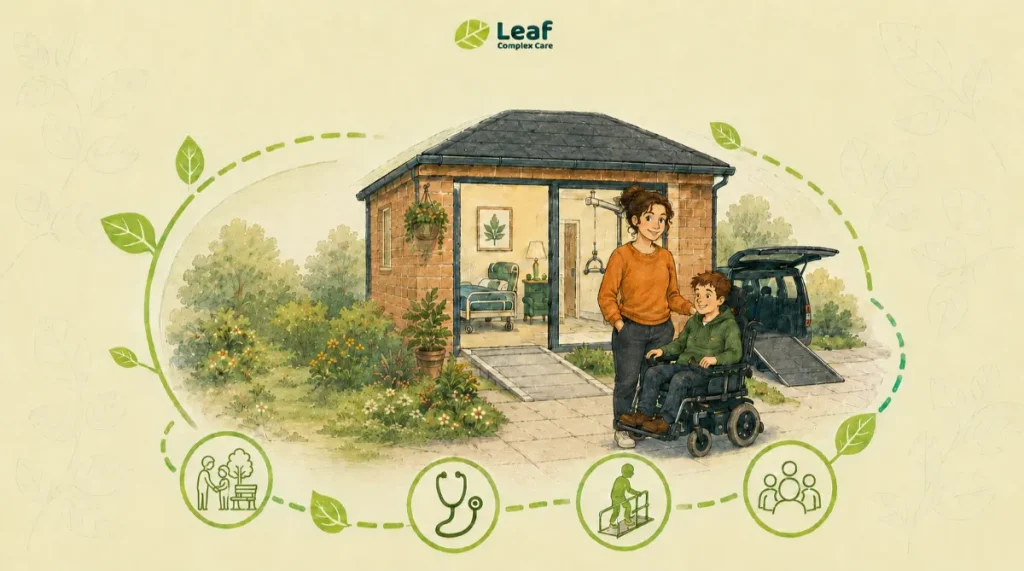
Difficulties may arise when accessible vehicles cannot accommodate wheelchairs or equipment, discharge occurs after public transport has stopped, or follow-up services involve long, costly or physically unmanageable journeys. Coordination should therefore involve all relevant health and social care professionals, with suitable transport arranged in advance rather than leaving the person or their family to solve it at the last moment.
Who is Most at Risk?
People most at risk include older adults living with frailty, people with multiple or complex conditions, physical disabilities, dementia, learning disabilities, autism or mental health needs.
Risk is also greater for those without reliable family or professional support, people experiencing homelessness or unsuitable housing, and anyone facing communication, financial, transport or healthcare-access barriers.
Reducing the Hidden Risks: What Works
Reducing post-discharge riskrequires the transition to be treated as a continuous care pathway, and not as a single event. Before people leave hospital, teams need to establish how health and social care will work together, what ongoing support is specifically required and who remains responsible at every stage. The coordinated approach behindintegrated care prevents needs from being overlooked and improves outcomes after discharge.
Effective Discharge Planning
An effective discharge planning process begins before discharge, continues through transition, and considers the person’s clinical, physical, psychological, social, communication and housing needs. It needs to involve the person, their chosen family or carers, local authorities, community professionals and providers of onward care, with a named coordinator overseeing the transition. When specialist support and transition teams are well coordinated, responsible, build trust with the person, and create the right conditions around them, discharge planning becomes a safe process.
Address any concerns about mental capacity in accordance with the Mental Capacity Act, and let duties under the Care Act inform decisions about social care and carer involvement.
Structured Discharge Communication
Structured communication should provide one accurate, current and accessible account of the person’s needs, treatment and next steps. Each action needs a named owner, timeframe and escalation route, with the plan shared promptly with the person, their carers and all relevant care services. Communication is complete only when teams received, understood and accepted responsibility for their part of the plan.
Post-Discharge Follow-Up and Monitoring
Safety must continue to be monitored after the person has returned to their own home or another community setting. Post-discharge care may include a welfare check on the day of discharge, medication reconciliation, clinical monitoring, carer contact and reviews of whether the support plan remains appropriate. Access to short-term rehabilitation, reablement and specialist support can help the person regain skills and independence, while a named contact and clear escalation plan allow emerging concerns to be addressed before they become a crisis or lead to readmission.
Strengthening Social Care and Community Capacity
Even the strongest plan cannot work if the necessary services are unavailable. NHS organisations, Integrated Care Boards, housing providers and local authorities need to build sufficient capacity across home care, community nursing, rehabilitation, supported housing, crisis response and carer support. Services designed to support discharge should be available when the person needs them, not only when staffing, funding or placements become available. Long-term joint planning across health and social care is therefore essential to ensure that people receive appropriate support throughout their recovery rather than encountering gaps between hospital and community provision.
Safe Hospital Discharge and Transition with Leaf Complex Care
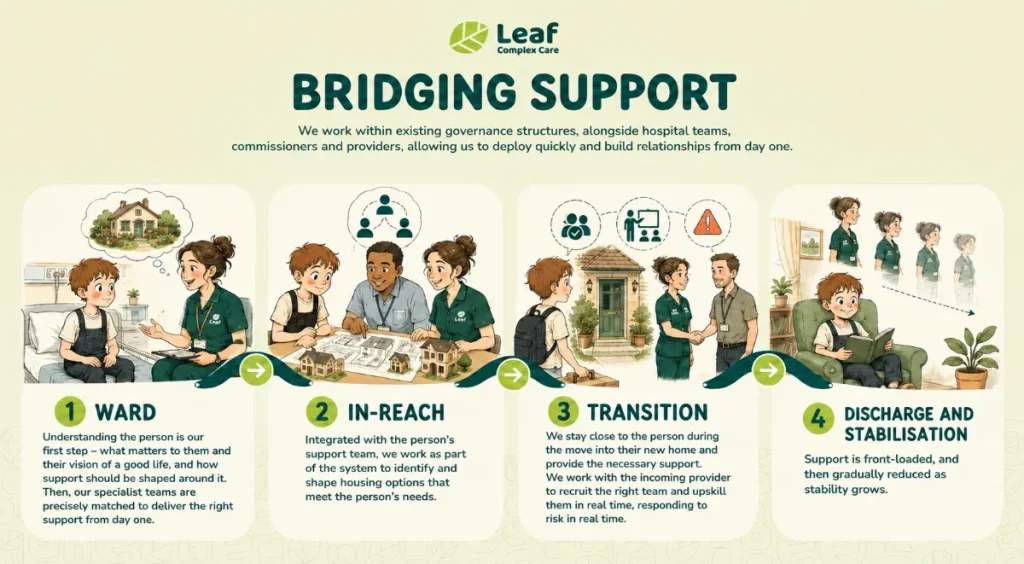
At Leaf Complex Care, we have developed a rights-based, person-led model of transition support shaped by working alongside commissioners, clinical teams, and families navigating some of the most complex transitions in the system. To move people safely into lives that reflect their hopes and needs, we focus on creating the conditions for safe, sustainable transitions, with transition teams with broad experience in stabilising high-risk situations and complex, specific challenges.
We work within existing governance structures, alongside hospital teams, commissioners and providers, allowing us to deploy quickly and build relationships from day one. All support is grounded in Positive Behavioural Support (PBS), with bespoke plans shaping MDT decisions and long-term care.
We bring together health, socialcare, housing, and communitysupportin a way that works around the person, not the system. This is our approach in the discharge process.
Offices: Bristol, the South East, the Midlands and Somerset.
If our offices are not in your living area, worry not, because we cover the UK with our services.
Do you need the right discharge transition for someone to move forward and remain in their community?
