
What Is PBS?
Positive Behaviour Support (PBS) is an evidence-based, person-centred approach that seeks to understand what a person may be communicating through their behaviour and what needs to change around them to improve their quality of life. The aim of PBS is not to control the person or simply reduce incidents. It is to create safer, more capable environments in which the person has greater choice, independence, dignity and access to a fulfilled life. As quality of life improves and support becomes more consistent and responsive, the need for restrictive practices can often be reduced.
Usually, a therapy team explores the person’s life history, health and social needs, communication, relationships, environment, sensory needs, routines, experiences of trauma or retraumatisation and access to meaningful activities. Once the therapists gain an understanding of why distress may be occuring and what purpose the behaviour may serve, it is used to create proactive, personalised support.
The PBS principles guide support towards greater dignity, independence, choice and quality of life.
Who Can Benefit From PBS?
PBS may be particularly helpful for autistic people (autistic children, young people and adults), people with a learning disability, people with mental health needs, and people who display behaviours that may communicate distress or place themselves or others at risk.

Behaviours of concern can sometimes arise because a person is unhappy with where they live, how others interact with them, or their inability to participate in the activities they value. The role of PBS is to understand those circumstances and identify what can change to improve the person’s life.
PBS can therefore benefit people who:
- experience frequent distress or crisis;
- are subject to restrictive practices;
- have difficulty communicating pain, choice, refusal or the need for support;
- are at risk of hospital admission or readmission;
- are moving from hospital into the community;
- have experienced repeated breakdowns in care;
- need support to build independence, coping or communication skills;
- are unable to access parts of their home or community because of perceived risk;
- require a more consistent and person-specific approach from their support team.
Read more about PBS in crisis situations and strategies for positive outcomes.
What Are Restrictive Practices?
Restrictive practices include actions, interventions or controls that limit a person’s freedom, choice, movement or autonomy, usually in response to an identified or perceived risk. Our therapy team has supported people in highly restrictive situations, including cases where physical restraint had become a routine part of their care. In some cases, people had been locked in rooms, denied access to parts of their own homes, prevented from taking part in community activities, or subjected to strict controls over food, possessions, and contact with others.
However, restrictive practices are not always immediately visible. They can also become embedded in everyday interactions and be presented as consequences, boundaries or ways of teaching. As our Restrictive Practice lead, George Rickard explains:
Restrictions can cover a wide spectrum of controls over others. At one end, it can be restrictions like saying to the person, for example: ‘Alice, you haven’t eaten your lunch today, you threw your plate. That’s bad. So, you can’t go out on your trip this afternoon.’ While it might seem like the intention is to teach Alice the importance of eating her meals, what’s actually happening is a form of punishment. But there could be some reasons why Alice did not eat her lunch. Perhaps she didn’t feel well or like the food, or something was bothering her. Whatever the reason, responding by restricting her ability to go out isn’t the solution. And is more likely actually to increase upset behaviour than reduce it.
This example demonstrates why restrictive practices cannot be understood only by looking at the severity of an intervention. Even a seemingly minor decision can limit a person’s rights and quality of life when it is used to control behaviour without understanding the person’s needs.
Read more on our blog about building better care through least-restrictive practices, co-produced with our Restrictive Practice Lead, George Rickard.
Why Do Restrictive Practices Occur?
Рestrictive practices often occur when care teams are trying to manage significant risk, particularly where a person’s distress may lead to self-injury, aggression or harm to others. In these situations, restrictions may be introduced with the intention of keeping people safe.
Restrictive practices may also occur when services lack confidence, specialist knowledge or access to less restrictive alternatives. This can be particularly relevant across health and social care services supporting people who require complex care. When staff do not fully understand why distress is happening, the immediate focus can shift towards stopping the behaviour rather than identifying pain, trauma, communication difficulties, sensory needs or environmental factors.
However, George explains that the people most likely to experience restrictive practices are often those already facing the greatest vulnerabilities. They may be autistic, have a learning disability or co-occurring health needs, or have experienced trauma, poor mental health, social isolation, repeated placement breakdowns or other major life challenges. These experiences can reduce a person’s ability to cope, communicate and recover from distress.
For people at risk, restrictive practices often occur in response to high-risk behaviours of concern. Many of those we support may have a lifelong condition such as learning disability or autism and co-occurring conditions, have experienced trauma, mental health issues or significant life challenges that mean their coping and resilience levels are low, and they are more vulnerable to behaviour that at times can harm themselves or others. The people with the highest risk behaviour can be the most at risk of restrictive practices. — Georgina Rickard, Restrictive Practice Lead
George also highlights that restrictive practices have historically been justified as being in the person’s best interests.
How Does Positive Behaviour Support (PBS) Reduce the Need for Restraint?
The aim of positive behavioural support is to recognise early signs of distress, use non-restrictive responses first and review every use of restrictivepractices by asking how it could be avoided in future. Restraint remains a last resort, while the wider goal is to improve the person’s quality of life and create support that makes crisis less likely.
Identifying the Function of Behaviour
Positive Behaviour Support looks beyond what a behaviour appears to be and explores what it may be communicating or helping the person achieve. PBS practitioners gather information from the person, their family, clinicians and wider circle of support, alongside daily records, incident reports, direct observations and the person’s health and life history. This helps the team identify possible triggers, contributing factors, and what happens before and after the behaviour.
Understanding its function allows the team to respond to the underlying need rather than simply trying to stop the behaviour. For example, distress may communicate pain, sensory overload, anxiety, a need for space, difficulty understanding what is happening or a desire to access something important. A lot of the time, it’s about understanding that behaviour is a form of communication. There’s a need that needs to be met. Using behavioural analysis means we can understand what the need is and meet it in another way.
Replacing Crisis Responses with Proactive Support
PBS reduces reliance on crisis responses by acting before distress escalates. Once practitioners understand the person’s needs and early signs of distress, they can develop proactive strategies that make difficult situations less likely.
Proactive support is about “anticipating people’s needs” and having a Plan B when the original option cannot be provided. – Kelly Skinner, PBS Lead Specialist.
Support plans also guide staff on what to do when the person begins moving away from their usual baseline. Instead of waiting until physical intervention appears necessary, care teams may offer space, additional processing time, reassurance, a change of supporting person or access to a familiar activity.
Teaching Alternative Skills
Once the function of behaviour is understood, PBS can help the person develop safer and more effective ways to meet the same need. This may involve learning to request a break, communicate pain or discomfort, ask for support, make a choice, cope with changes, or use a personalised emotional regulation strategy.
Alternative skills must serve the same purpose as the original behaviour and be accessible to the person. It is not enough to tell someone what they should not do. Instead, they need a reliable way to communicate or achieve what matters to them. The therapy team may therefore work alongside speech and language therapists, occupational therapists and multimedia specialists to create communication aids, visual resources or personalised teaching strategies.
Focusing on Quality of Life
The central aim of PBS is to improve the person’s quality of life by increasing choice, independence, meaningful relationships, community participation and access to the activities they value. A reduction in behaviour is meaningful when it happens because the person is better understood, has greater control and experiences fewer sources of distress.
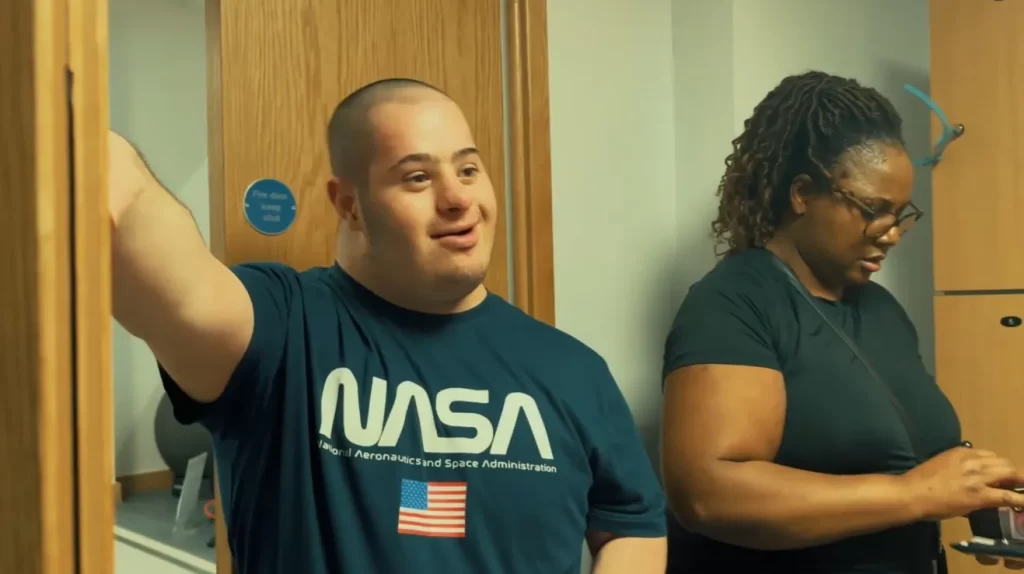
Progress may therefore include rebuilding family relationships, going out more frequently, learning independent living skills or reducing restrictions within the person’s home. PBS measures success not only through fewer incidents, but through evidence that the person is living a fuller, safer and more self-directed life.
A more meaningful PBS outcome asks:
- Is the person doing more of what matters to them?
- Do they have stronger relationships and a support network?
- Can they communicate choices and discomfort more effectively?
- Are they taking part in community life?
- Are they developing useful skills?
- Do they have greater control over their home and routines?
- Are formal and informal restrictions being reduced safely?
Person-Centred Care at the Heart of PBS
Person-centred care is the foundation of Positive Behaviour Support. Rather than beginning with risk or behaviour, PBS begins with the person and their history, communication, relationships, strengths, preferences, goals and understanding of a meaningful life.
Tailored Behaviour Support Plans
A PBS plan is developed around the person rather than applying a standard response to everyone. It brings together the person’s views, information from those who know them well, direct observations, and behavioural assessments to identify which support is most likely to work.
The care plan and the right support may include proactive strategies, communication support, environmental adaptations, skills teaching, early responses to distress, crisis guidance and recovery support. Because people and circumstances change, the plan should remain a living document that is regularly monitored, reviewed and adjusted to reflect the person’s progress, preferences and current needs.
The Role of Carers in Delivering Effective PBS
Because carers spend the most time with the person, they are often best placed to recognise subtle changes in mood, health or behaviour, distress and understand which approaches work well. Their observations also provide valuable information for assessments, reviews and ongoing monitoring. For PBS to be effective, carers need clear guidance, person-specific Positive Behaviour Support training and opportunities to practise the agreed strategies. The therapy team may model approaches within the person’s home, coach staff in real situations and help teams understand not only what to do, but why each strategy matters. This helps carers develop knowledge, confidence and consistency in applying the plan. Consistency is essential, as conflicting or unpredictable responses can increase confusion and distress.
Multi-Disciplinary Team Involvement
The right PBS often requires input from several professional disciplines because behaviour may be influenced by various factors that we already mentioned. PBS practitioners therefore work alongside occupational therapists, speech and language therapists, multimedia specialists, community psychiatric nurses, social workers, healthcare professionals and the person’s wider support network.
This joined-up approach helps the team build a fuller understanding of the person and avoids treating behaviour as an isolated issue.
Reducing Restrictive Practices Through PBS with Leaf Complex Care
Our therapy team works alongside the person, their family, clinicians and wider multidisciplinary network to review restrictions, strengthen proactive support, improve communication and build capable environments.
Over six months, we have significantly reduced the use of physical interventions, from 40 incidents in the first two-month period to 20 in the second and just 9 in the final period, an overall reduction of more than 75%. Alongside this, we also reduced the use of PRN medication from 15 administrations to 4, and then to just 1 across the same timeframe, demonstrating a sustained and meaningful reduction in reactive interventions.
We bring a set of skills and a toolkit, and then we rely on everyone else and need them to have their input. The people on the ground who know the person are the most important—the family, the clinicians, the people who are there day to day, and the person themselves. – Darren Moyle, PBS Specialist.
Highly qualified in Positive Behaviour Support and PROACT-SCIPr-UK®, our team’s purpose is to support people’s life choices and interests by providing:
- Proactive, active, and calming strategies
- Environmental assessment
- Reducing restrictive practices
- Support for people with single and multiple behaviours of concern
- Support in multimedia and assistive technology (multimedia avatars, visual charts, video stories…)
- Trauma-informed care and support via the PACE Model and the PERMA Model of Wellbeing
- Support with Talking Mats, a visual communication system for people with communication difficulties
and many more services.
Explore our full range of services and expertise here.
Now, meet Will. In the following video, hear what Maurizia, Will’s mother, has to say openly about the challenges they faced in the past and how our support workers got involved in supporting Will.
To discuss how Leaf Complex Care can support someone through a person-centred, least-restrictive approach, contact us at our offices in Bristol, the South East, the Midlands, and Somerset, or simply make a referral below.
