

What is Sensory Processing?
Sensory processing (often called sensory integration) is the way the central nervous system manages information received from the senses (sound, touch, taste, smell, balance and body awareness). It is a process in which the brain interprets, organises, and responds to sensory input from the environment and the body. When this process works efficently, it allows us to interact with the world in a meaningful way.

Our brains automatically interpret the sensory information we receive from the world, without any conscious decision on our part. For people with Sensory Processing Disorder (SPD), however, this process is disrupted: the brain misreads sensory signals and reacts in atypical ways beyond our control. Because of this, SPD can be hard to comprehend or articulate, even for those living with it.
Why This Topic Matters for Parents and Carers
Understanding sensory processing is transformative for parents and carers because it reframes behaviour as communication. When a child struggles with sensory input, they are often reacting to an environment that feels physically painful, chaotic, or confusing, even if that same environment seems perfectly neutral to others. Also, it shifts the perspective from ”misbehaviour” to ”regulation”. Many behaviours that look like tantrums, defiance, or ”naughtiness” are actually stress responses caused by sensory overload.
When parents understand the specific systems (such as proprioception or the vestibular system) involved, they can move towards evidence-based strategies. It also reduces parental burnout and self-blame, and encourages proactive planning (with this knowledge, you can create a “sensory-friendly” home environment). By creating quiet corners, dimming lights, or managing clothing textures, you reduce the number of daily “melt-downs,” leading to a more harmonious household.
Checklist for Parents
If you notice consistent distress, try to document the “ABC” of the incident to identify sensory triggers:
- Antecedent: What was happening right before the behaviour? (e.g., loud environment, bright lights, transition time).
- Behaviour: What was the actual response? (e.g., hiding, shouting, shutting down).
- Consequence: How did your child calm down? (e.g., finding a dark space, physical movement, deep pressure).
By tracking these, you create a pattern that helps you, your child, and your professional support team (like an Occupational Therapist) build a life that feels more predictable and comfortable for your child.
Checklist for Parents
If you notice consistent distress, try to document the “ABC” of the incident to identify sensory triggers:
• Antecedent: What was happening right before the behaviour? (e.g., loud environment, bright lights, transition time).
• Behaviour: What was the actual response? (e.g., hiding, shouting, shutting down).
• Consequence: How did your child calm down? (e.g., finding a dark space, physical movement, deep pressure).
By tracking these, you create a pattern that helps you, your child, and your professional support team (like an Occupational Therapist) build a life that feels more predictable and comfortable for your child.
Here is how you can support your child at home.
Definition and Overview of Sensory Processing Disorder SPD
Sensory Processing Disorder (SPD) is a neurological condition in which the brain has difficulty receiving, interpreting, and responding to sensory information. This affects how people perceive everyday sensations, such as touch, sound, light, movement, taste, and smell, and can significantly impact daily life and behaviour. In SPD, the nervous system either over‑responds (hypersensitivity), under‑responds (hyposensitivity), or seeks extra sensory input (sensory seeking) in ways that differ from typical sensory processing.
Sensory processing involves more than the “five senses.” It also includes:
- Vestibular (balance & movement)
- Proprioception (body awareness)
- Interoception (internal body cues like hunger, thirst, temperature)
SPD can impact:
- Daily routines: dressing, hygiene, eating, and school participation
- Learning and concentration: difficulty filtering background noise or visual clutter
- Motor skills: clumsiness or movement challenges
- Emotional regulation: overwhelm due to sensory overload
In the UK, “Sensory Processing Disorder” is generally not classified as a standalone medical diagnosis by the NHS or the Royal College of Occupational Therapists. Instead, occupational therapists, SEN specialists, and educators recognise it as “sensory processing differences” or “sensory processing difficulties.” This distinction is important because it shifts the focus from looking for a label to understanding a child’s unique sensory profile and addressing their specific functional needs.
Definition and Core Characteristics of Autism
Autism is a lifelong neurodevelopmental difference that affects how a person communicates, interacts with others, thinks and experiences the world. In medical settings (e.g. during diagnosis), autism is commonly called Autism Spectrum Disorder (ASD) and defined using standard criteria such as the ICD‑11 or DSM‑5, according to the Diagnostic and Statistical Manual of Mental Disorders. It is a spectrum condition, meaning it presents differently in each person, with varying strengths, challenges and support needs. Autism is present from early development and continues throughout life.
The core characteristics autistic people may experience in everyday life include:
- Social communication challenges and interaction differences
- Have differences in the use of speaking and non‑speaking communication (e.g. understanding tone, facial expressions or body language)
- Strong preference for routine, predictability and sameness
- Autistic stimming and repetitive behaviours
- Deep, focused and sometimes intense interests in particular topics (often called special interests)
- Sensory processing differences
A blog co-written by an expert – Here, you can learn directly about autistic communication differences, normalising autistic stimming, and building communication tools, all from a speech and language therapist with lived experience.
Key Similarities Between SPD and Autism
While many autistic people experience sensory sensitivities like those seen in SPD, SPD itself is not currently a standalone clinical diagnosis in UK diagnostic manuals, whereas sensory differences are a recognised feature within the autism diagnostic process. However, the behavioural experiences in daily life can look very similar, which is why many families and practitioners talk about SPD and autism together in practical support planning.
Sensory Sensitivities
Both SPD and many autistic people experience sensory processing differences, meaning they interpret and respond to sensory input (e.g. light, sounds, touch, smells, tastes) differently than what is typical for others. These differences often include hypersensitivity (over-responsiveness) or hyposensitivity (under-responsiveness) to sensory stimuli.
- Hyper‑sensitivity might look like covering ears in noisy environments or distress with bright lights.
- Hypo‑sensitivity might show as not noticing loud sounds or seeking extra sensory input (like spinning or deep pressure).

These patterns are common in both SPD and autistic sensory experiences and bring sensory processing issues on their own. In both SPD and autism, sensory input can become overwhelming, often called sensory overload. This can lead to strong emotional or behavioural responses, such as distress, withdrawal, or agitation, when the sensory environment becomes too intense.
Behavioural Responses to Sensory Input
People with SPD and many autistic people often respond to sensory input in ways that can be observed behaviourally. These responses are not intentional misbehaviour but reflect the nervous system’s way of coping with overwhelming or insufficient sensory stimuli. Common behavioural patterns include:
- Avoidance (actively avoid environments or situations that feel overwhelming, covering ears in busy classrooms, refusing to wear certain fabrics, or avoiding crowded places and loud noises).
- Meltdowns(an intense response to overwhelming sensory input, which can include crying, shouting, flailing, or other visible distress behaviours.) Unlike tantrums, meltdowns are neurological and sensory-driven, not attempts to manipulate or seek attention.
- Withdrawal (sitting quietly, turning away, or disengaging from activities). It is often a protective response, allowing the nervous system time to regulate.
Some autistic people and people with SPD may actively seek intense sensory input to feel regulated or alert. Some examples include bouncing, spinning, ”crashing” into soft objects or seeking deep pressure. Sensory-seeking behaviours are common in both SPD and autism and often help the person self-regulate, even if they look unusual to others.
As a parent, you have the deepest understanding of your child, especially when they are dealing with powerful, overwhelming emotions. Supporting their mental health and overall well-being can involve learning how to identify, express, manage, and respond to those emotions in ways that suit their individual needs. In our Autism Guide, developed alongside our specialist therapy team, we share a range of practical strategies and professional insights to help you offer the essential support your child requires.
The Autism Guide is available for download now.
Key Differences Between SPD and Autism
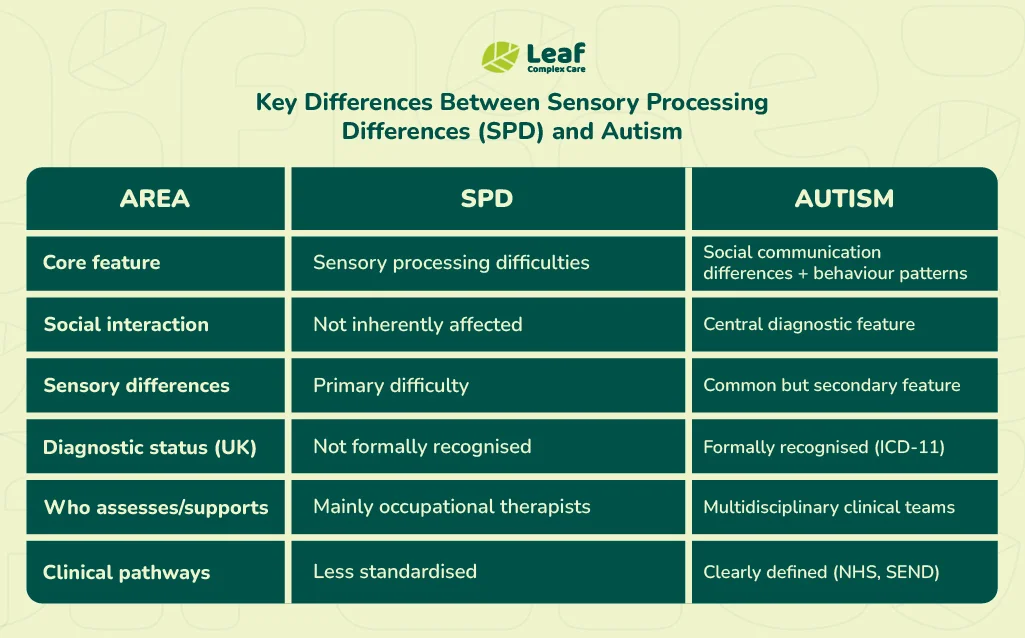
While SPD and autism can overlap and many autistic people experience sensory differences, they are not the same condition. There are many factors that affect the distinction, and we will be sharing more information about the differences in social communication and interaction, as well from clinical point such as diagnosis and recognition.
Social Communication and Interaction
SPD specifically refers to how the brain processes sensory input, leading people to over-respond, under-respond, or seek out sensory experiences, often affecting regulation in everyday environments. In contrast, autism is a neurodevelopmental difference primarily characterised by differences in social communication and interaction, including challenges with conversation, non- speaking communication, relationships, and understanding social cues or perspectives. While sensory differences can be present, they are not the core defining feature.
The key distinction is that autism fundamentally involves social differences, which lead to social communication challenges, whereas SPD is centred on sensory processing. Any social difficulties in SPD are typically secondary to sensory challenges, rather than arising from differences in social understanding itself.
Diagnosis and Clinical Recognition
Autism is a formally recognised neurodevelopmental condition in both the ICD-11 and DSM-5, with clear diagnostic criteria centred on differences in social communication, interaction, and restricted or repetitive behaviours. In the UK, diagnosis is carried out by multidisciplinary teams within the NHS or specialist services, and autism has established clinical pathways and legal recognition within SEND frameworks.
In contrast, Sensory Processing Disorder (SPD) is not formally recognised as a standalone diagnosis in the ICD-11 or DSM-5. Instead, UK guidance refers to sensory processing differences, which are widely acknowledged and supported in practice, particularly by occupational therapists. While SPD may be used as a descriptive term, support is typically provided through SEN plans and therapeutic interventions, meaning it is clinically recognised in practice but not formally diagnosed.
The key point to the main difference is that SPD is clinically recognised in practice, but not formally diagnosed in medical classification systems.
Can a Person Have Both SPD and Autism?
Yes, a person can experience both SPD and autism. In fact, it is far more common for a person to experience both than to have one without the other. Although they are separate conditions, they often co-occur. Studies indicate that around 70% to 90% of autistic children also have sensory processing difficulties. That said, sensory processing disorder can occur on its own, meaning its presence does not necessarily indicate autism.
Overlap: Sensory Issues and Comorbidity in Autistic Children
According to the National Autistic Society, sensory differences such as hypersensitivity to noise, light, or touch, or seeking intense sensory experiences are extremely common in autistic people and are included within the diagnostic criteria for autism.
In children, this overlap is particularly important because sensory processing difficulties can significantly affect behaviour, emotional regulation, and participation in everyday activities such as school or social settings. Healthcare professionals, especially occupational therapists, frequently assess and support sensory needs as part of a child’s overall profile. As a result, many autistic children are described as having “autism with sensory processing difficulties,” or are informally referred to as having SPD alongside autism. highlighting the importance of tailored support strategies rather than focusing solely on diagnostic labels.
Rather than asking “Is it SPD or autism?”, social care practice often focuses on:
“What are this child’s sensory needs, and how can we support them?”
Support and Interventions
Support and interventions for people with sensory processing differences or autism focus on improving daily functioning, comfort, and participation in everyday life. With the right interventions in place, children and adults can better manage sensory experiences, build confidence, and engage more fully at home, in education, and within their communities.
Support for Sensory Processing Difficulties
Support for sensory processing differences is typically led by occupational therapists (OTs) and extended across educational, healthcare, and home environments. As a core intervention, occupational therapy is recognised. Occupational therapy is the primary evidence-informed intervention for sensory processing difficulties, focusing on:
- Supporting people to participate in everyday activities (e.g. dressing, learning, play)
- Uses both:
- “Bottom-up” approaches (addressing sensory processing itself)
- “Top-down” approaches (adapting tasks and environments)
Another essential support intervention is Sensory Integration Therapy (SIT), which helps the brain organise and respond to sensory input more efficiently. It is delivered through structured, play-based activities (e.g. movement, balance, tactile input). What’s important to know is that SIT is usually one part of a wider support plan, not a standalone solution.
Additional common interventions include:
- ”Sensory Diets” – A personalised plan of activities that help regulate sensory input throughout the day (deep pressure activities, movement breaks (jumping, swinging), fidget tools or tactile input and scheduled calming activities).
- Environmental adaptations – Adapting environments to reduce overwhelming stimuli, create predictable, structured spaces, provide quiet or low-stimulation areas and adjust classroom layouts and routines.
Support for Autism
Support for autistic children, young people and adults often involves a multidisciplinary approach and draws together professionals such as:
- Speech and Language Therapists (SLTs)
- Occupational Therapists (OTs)
- Clinical/Child Psychologists
- Behaviour Specialists or Educators
- Paediatricians or Developmental Paediatric Teams
- Education and School SEN teams
This team works collaboratively to assess needs, plan support goals and implement strategies across home, school and community settings.
Behavioural Support
General principles of behavioural support include:
- Understand the function of behaviour (what need the behaviour is communicating)
- Use positive reinforcement to encourage alternative behaviours
- Set clear, consistent rules and expectations
- Use choices and visual supports to help the person feel in control
- Avoid confrontation where possible and anticipate triggers
- Promote routines that reduce unpredictability and distress
Communication Strategies
Supporting communication for autistic people involves adjustments that make interactions clearer and more predictable. Recommended strategies include:
- Use clear, concrete language (e.g., “Put your coat on” instead of “It’s time to brave the cold”).
- Give time to process (pause after asking a question and allow extra time for the autistic person to respond without rushing them).
- Use visual supports (tools such as visual timetables, choice boards, Picture Exchange Communication System (PECS) and social stories
- Adapt the environment (reducing background noise, softening lighting, and minimising sensory distractions can help communication and focus).
- Alternative communication modes (people communicate using writing, drawing, gestures, or technology, all of which should be supported and validated).
Role of an Occupational Therapist in Assessing Sensory Integration
Occupational therapists (OTs) are specialists in helping people participate in daily life, and for autistic people or those with sensory differences, a key part of their role is assessing sensory integration – how the nervous system processes and responds to sensory information. Their main goal is to improve daily functioning, participation, and emotional regulation, making life easier and more manageable for the person.
Occupational therapists use a holistic, person-centred approach to assess sensory integration through observation in natural settings (home, school, clinic), standardised tools and questionnaires (e.g., Sensory Profile 2), and functional assessment of daily activities (dressing, eating, play, social participation). They work with SLTs, psychologists, behaviour specialists, and paediatric teams for a cohesive, individualised support plan.
A blog co-written by an expert– Here, you can learn directly about the key factors in adequately assessing and evaluating autistic people, all from an occupational therapist.
When to Seek Evaluation and Treatment
Seek evaluation when sensory challenges interfere with daily life, learning, or social participation, such as:
- The child struggles with dressing, eating, toileting, or hygiene due to sensitivities.
- Everyday routines trigger meltdowns, distress, or avoidance behaviours.
- The child reacts strongly to sounds, textures, lights, or movement that others tolerate.
- Shows little awareness of sensations, may seek intense sensory experiences.
- Difficulty focusing in school or completing tasks due to sensory overload.
- Struggles to participate in group activities, play, or social interactions.
- Behaviour appears challenging or unpredictable, often linked to sensory discomfort.
SPD and Autism Support with Leaf Complex Care
We are an autism-accredited provider with ‘GOOD‘ and ‘OUTSTANDING’ ratings from the CQC for our support services across the CQC’s five domains. We support autistic people, people with a learning disability and people with multiple needs in complex situations.
We can support you with therapeutic support, rapid response and housing.
With multidisciplinary expertise, consistent support teams, and real-world application, this support helps people with SPD and/or autism build independence, develop routines, improve emotional well-being, and live meaningful, fulfilling lives.
Contact Leaf Complex Care for a tailored support around one person’s hopes, needs and preferences.
Offices: Bristol, South East, Birmingham, and Somerset.
FAQs
Does SPD Improve with Age?
SPD can improve over time, particularly with the right support, but it does not simply disappear with age. Many children learn to manage their sensory differences through strategies, environmental adaptations, and support from professionals such as occupational therapists. As they grow, they often develop better self-awareness and coping skills. However, some sensory sensitivities or preferences may continue into adolescence and adulthood, especially without early intervention.
Can Trauma Mimic SPD Symptoms?
Yes, trauma can sometimes mimic symptoms similar to SPD. Children who have experienced trauma may become highly sensitive to sounds, touch, or environments, or appear withdrawn or unresponsive, as their nervous system remains on high alert. These responses are linked to emotional and psychological stress rather than differences in sensory integration.
Can Adults Have SPD Without Autism?
Yes, adults can experience sensory processing difficulties without being autistic. While these challenges are often associated with autism, they can occur independently and may affect how a person responds to sound, touch, movement, or other sensory input in daily life.
