

What Is EBSA (Emotionally Based School Avoidance)?
Emotionally based school avoidance (EBSA) is when a child or a young person experiences severe emotional distress about attending school, which may present itself as extreme anxiety, feeling sick, stomach pain, panic of leaving the family home (due to illness), or fear of low performance in school amongst peers. Many people mistake emotionally driven school avoidance for a personal desire to escape school for a day or two. EBSA is not a form of poor behaviour, nor do parents bear the guilt when their children miss school due to mental health difficulties, physical symptoms of hardship and emotional difficulties. The headaches, low moods, or intense anxiety symptoms reflect the difficulty attending school that one child experiences due to overwhelming emotional needs. Children and young people with EBSA often want to attend school but feel unable to do so because of the intensity of their distress.
Emotionally based school avoidance is a complex and very individual experience that develops out of a number of various factors, including mental health needs, unmet special educational needs, neurodiversity, peer relationships, family circumstances, and school-based pressures.
Early Warning Signs of EBSA
Emotionally based school avoidance (EBSA) develops gradually, with early signs often appearing before full non-attendance. The signs are sometimes dismissed as a ‘phase’ or as part of a young person’s personality (e.g., shyness or natural withdrawal), which can delay the timely support needed. Early identification means listening to the young person and acting when these patterns first appear, as difficulties become more entrenched the longer they remain unaddressed. Let’s go through the early warning signs separately.
Subtle Behavioural Changes
EBSA often begins with gradual, easily overlooked changes rather than a sudden refusal to attend school. Young people may remain physically present in school but begin to avoid particular lessons, individuals, or parts of the school day, indicating a gradual pattern of avoidance. Parents and school professionals must closely monitor changes in behaviour and attendance patterns, as these subtle shifts can signal the development of EBSA.
The most common subtle change of behaviours are:
- Patterns of non-attendance
- Frequent minor illnesses
- Reluctance to attend trips
- Difficulty separating from parents
- Social withdrawal
- Avoidance of peers
- Reduced engagement
- Under-achievement
- Confusion or absent-mindedness due to poor concentration
- Low mood and confidence

Emotional presentation may also change, including increased fearfulness, low mood, emotional upset, or complaints of feeling unwell on school days, sometimes accompanied by physical signs of anxiety (e.g., headaches, stomachaches, sweating). Avoidance is becoming the young person’s coping strategy for managing emotional distress. At this stage, they may appear to be “managing” by selectively disengaging (for example, missing certain lessons), before this develops into more sustained absence if not recognised and supported early.
Increased Anxiety Around School Days
As anxiety increases, school avoidance becomes the child or young person’s main coping strategy to manage the emotional distress they associate with being in school, in lessons, or among peers. At this stage, some children may continue attending but begin avoiding particular lessons, individuals, or parts of the school day, while others struggle with extended periods of attendance.
The heightened anxiety is linked to a range of underlying worries, including:
- Social anxiety (fear of ridicule, rejection, isolation or bullying)
- Anxiety around learning (fear of failure, letting others down, or not keeping up)
- Health anxiety and difficulty coping with sensory demands
- Separation worries or concerns about things happening at home
These anxieties are commonly identified as early contributors to EBSA and often intensify on school days or during school preparation. EBSA is most likely to emerge when stress and anxiety exceed the support available, and when “pull factors” away from school outweigh the “push factors” encouraging attendance. Increased anxiety around school is therefore seen as an early warning signal that emotional demands are outweighing a young person’s coping resources.
Changes in Sleep, Appetite, or Mood
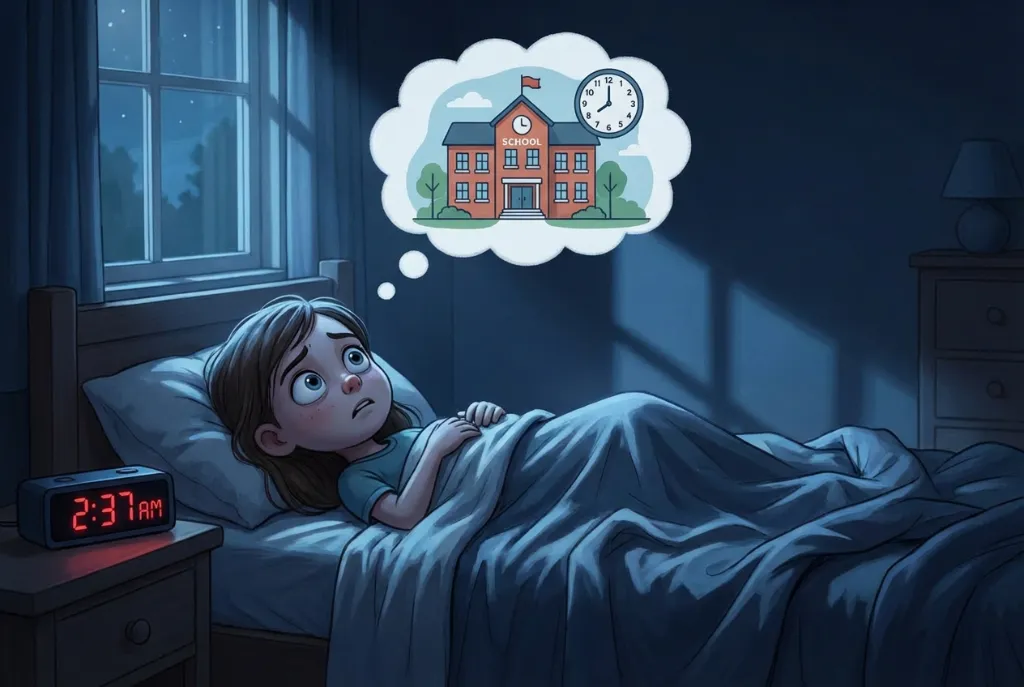
Children and young people experiencing EBSA may present with “difficulties sleeping”, including nightmares linked to anxiety (for example, worries about a parent or separation), which are described within the push and pull factors that draw a child away from school. Anxiety-related symptoms are also noted to often begin the night before, or even a few days before school, reflecting how emotional distress can disrupt sleep patterns.
Physical changes associated with emotionally based school avoidance are also listed as possible indicators, including rapid weight loss or gain, alongside other stress-related bodily symptoms, poor eating patterns or a diet affected by and/or affecting mood.
You might notice:
- Difficulty falling asleep (racing thoughts, worry about the next school day)
- Frequent night waking or early morning waking
- Increased tiredness during the day
- Reversed sleep patterns (awake late, struggling to get up for school)
- Reduced appetite, especially in the mornings before school
- Skipping breakfast or feeling nauseous at mealtimes
- Comfort eating or increased snacking
- Complaints of stomach aches linked to eating
- Sudden changes in food preferences
- Increased irritability or emotional outbursts
- Loss of interest in previously enjoyed activities
- Reduced confidence or negative self-talk
- Loss of interest in previously enjoyed activities
Emotional Signs and Symptoms of EBSA
Emotionally Based School Avoidance (EBSA) is driven primarily by intense emotional distress rather than defiance or laziness. While children experiencing EBSA may show physical or behavioural signs (like stomach aches, headaches, or refusal to get ready), the core driver is emotional. Emotional responses are often the first indicators of EBSA, appearing before absences become frequent.
Increased School Anxiety
Children and young people experiencing emotional-based school avoidance (EBSA)often show a noticeable increase in school-related anxiety. This may present as persistent worry about school attendance, distress during school preparation, or heightened emotional reactions to lessons, teachers, peers, or transitions. Anxiety may build over time and is frequently worse in the evenings or mornings before school.
Young people may express fears about academic performance, letting others down, social situations, bullying, or feeling different. Some develop separation anxiety, becoming highly distressed about being away from parents or carers.
School anxiety can be reflected as:
- Increased worry about school or specific aspects of the school day
- Emotional distress before or during school attendance
- Avoidance of certain lessons, staff, or peers
- Fear of failure or social rejection
- Reliance on avoidance as a way to manage anxiety
Panic or Fear
Some children and young people experience intense fear or panic linked to school attendance (sudden emotional overwhelm, tearfulness, freezing, or refusal at the school gate, as well as physical symptoms such as nausea, headaches, or feeling unwell). Panic responses can be triggered by specific situations (such as entering the classroom or separating from caregivers) or by the anticipation of school itself. For many, these reactions reflect genuine emotional distress rather than behavioural choice.
Panic and fear are a part of the anxiety-avoidance cycle. When a young person avoids a feared situation, the immediate reduction in distress reinforces the belief that school is unsafe. Over time, this strengthens fear responses and reduces confidence in coping with future challenges. Common underlying fears include academic pressure, social difficulties, sensory sensitivities, and worries about family members’ well-being. These experiences are often interconnected and shaped by wider environmental factors.
Key indicators include:
- Acute distress or panic when attending or preparing for school
- Strong fear responses to specific school situations
- Physical symptoms associated with emotional overwhelm
- Increased dependence on caregivers during school transitions
Irritability
Irritability is often seen alongside anxiety and low mood in children experiencing emotionally based school avoidance (EBSA). This may present as increased frustration, emotional outbursts, withdrawal, or noticeable changes in behaviour. Young people may appear more sensitive to everyday stressors or react strongly to situations they previously managed. When children feel overwhelmed by anxiety, unmet needs, or prolonged stress, their capacity to regulate emotions reduces. This can result in heightened reactivity or withdrawal.
Because emotion-based school avoidance is shaped by multiple pressures across school, home, and the person, irritability often reflects accumulated emotional strain rather than isolated incidents. Irritability may reflect as:
- Increased emotional reactivity or frustration
- Changes in mood or personality
- Withdrawal from peers or family
- Reduced tolerance for demands or transitions
Physical Signs and Symptoms of EBSA
The physical signs and symptoms are most pronounced on school days or when school attendance is anticipated, and may diminish when the child or young person is allowed to remain at home. Children and young people experiencing emotionally based school avoidance frequently present with physical symptoms that reflect emotional distress, including:
- Stomach aches, nausea, or feeling sick
- Headaches
- Fatigue or low energy
- General feelings of being unwell
- Dizziness or shakiness associated with anxiety
- Difficulty falling asleep
- Sensory overload in busy or noisy environments
- Difficulty coping with the physical demands of school
- Heightened physiological responses to stress
EBSA and Neurodivergent Children
Neurodivergent students, especially autistic pupils, are disproportionately represented among those experiencing EBSA. In a large UK survey, most children experiencing school distress were neurodivergent, with autistic children showing earlier onset and longer duration of distress than other groups. Over 30% of autistic pupils in England are classed as “persistent absentees” (including exclusion and EBSA). A core reason is that mainstream schooling often feels hostile or overwhelming.
Anxiety predicts school non‑attendance in autistic adolescents more strongly than other factors like academic performance or peer relationships. Therefore, neurodivergent children and young people are at significantly increasedrisk for emotionally based school avoidance. Research indicates that the environment, rather than the student, often causes distress among neurodivergent learners. School systems are usually designed around rigid expectations, sensory environments, curriculum pace and social norms that many neurodivergent students find overwhelming.
Read more about identifying the key signs of neurodiversity.
EBSA and Autism
In autistic children, EBSA is increasingly understood not as a “choice” but as a response to stressors experienced in the school environment. As we already mentioned, anxiety is the strongest predictor of non-school attendance, so anxiety directly correlates and predicts future emotion-based school avoidance (EBSA).
Autistic children may develop EBSA not because of one single issue, but due to a combination of:
- Anxiety is linked to sensory overload and unpredictable environments
- Social stress (peer interactions, fitting in)
- Feeling misunderstood, masked or unseen by staff
- Executive function and transition challenges
- Environmental mismatch between learner needs and school demands
Qualitative research focusing specifically on autistic girls shows that supportive student–adult relationships are a key first step toward re‑engagement after EBSA. In other words, trusting connections with adults can help reverse avoidance behaviours. This aligns with broader research indicating that autistic girls may mask internal distress longer and present differently than boys, leading to more subtle signs of avoidance that go unrecognised until late. Girls and masked learners may present differently, but still experience emotionally based school avoidance (EBSA).
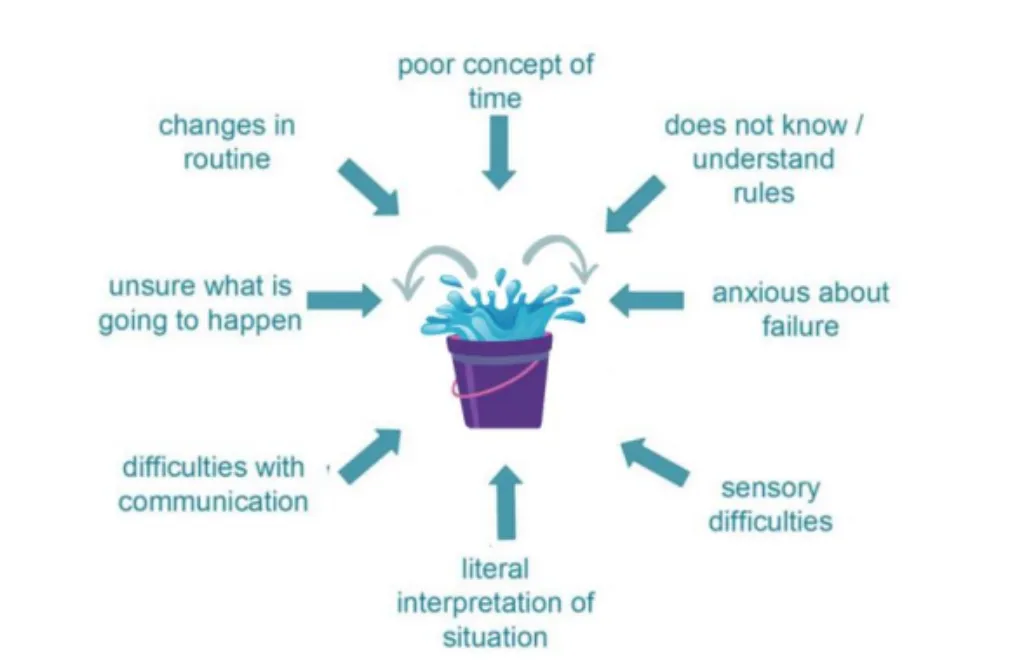
Illustration courtesy of Dr. Jerricah Holder, Child & Educational Psychologist, EBSA Horizons CPD
EBSA and Children with Complex Needs
Children and young people with multiple needs who need complex care, mental health needs or special educational needs and disabilities (SEND) are at a higher risk of experiencing EBSA. For example, children with SEND are more likely to struggle with school attendance and experience EBSA compared with their peers. Specifically, SEND students are about 50% more likely to have difficulty attending school due to emotional distress. Emotional distress rooted in anxiety, histories of trauma, loss, or mental health difficulties underpins many EBSA cases. In autism, persistent absence and avoidance are notably high – 31% of autistic pupils were persistently absent.
Emotion-based school avoidance (EBSA) is not a willful choice or a form of defiance. Students with sensory processing issues (e.g., noise sensitivity, crowded corridors) often find standard school environments overwhelming. Without suitable adaptations, this creates a stress‑response pattern that contributes directly to avoidance. While children with speech, language, or communication needs may avoid school because social interaction is stressful or exhausting, or because their difficulties make learning and peer engagement challenging.
From Anxiety to Avoidance: How EBSA Develops Over Time?
EBSA rarely appears suddenly. It usually evolves gradually, often starting with emotional distress before attendance becomes impossible. The progression usually goes through stages:
Stage 1: Emotional Warning Signs (Early Anxiety)
Children begin experiencing heightened anxiety about school before any actual refusal. Typical indicators include complaints of morning stomachaches, headaches, or other somatic symptoms, difficulty falling asleep, and concerns about negative feelings or thoughts about school. Mechanism: The child’s nervous system interprets school-related stimuli as threatening, triggering a stress response.
Example: A child may say, “I feel sick” every Sunday night before school, not to skip school intentionally, but because anxiety triggers real physical symptoms.
Stage 2: Increased Resistance and Partial Attendance
In this stage, anxiety intensifies, and the child starts to resist attending school. The signs are everywhere. The child arrives late to school, requires an escort, or makes frequent calls or messages to parents expressing fear or distress. Mechanism: The child begins testing coping strategies, trying to attend school while minimising distress.
Example: The child attends morning lessons but leaves early, gradually increasing the number of absence days.
Stage 3: Avoidance Behaviour Becomes Established
Avoidance becomes the dominant strategy for managing distress. Prolonged or repeated absence is present, as well as an increased social withdrawal, and escalating mood disturbances appear. Mechanism: Avoidance temporarily reduces anxiety, reinforcing the behaviour through negative reinforcement.
Example: The child now refuses to attend school and experiences panic at the thought of going.
Stage 4: Chronic EBSA and Associated Impacts
Long-term avoidance can lead to school disengagement, social isolation, and co-occurring mental health issues. At this stage, complete refusal to attend school begins, withdrawal from peers and extracurricular activities, as well as behavioural challenges outside school. Mechanism: The avoidance is no longer just a coping mechanism, but it is entrenched, with anxiety and learned helplessness reinforcing each other.
Why this stage matters: Interventions become more intensive, often requiring multidisciplinary support (mental health professionals, educational staff, family, and, at times, medical support).
Supporting a Child Showing Early EBSA Signs
To support children, we must create long-term support frameworks, provide meaningful SEN provision and access to specialist support (e.g., Speech and Language Therapy, Occupational Therapy), and enable schools to create flexible curriculum adjustments and environmental adaptations, and achieve all this by working with the parents, health professionals and children themselves. The goal is to strengthen the child’s sense of belonging and voice.
Know Children’s Rights, Support Children’s Journey
Several key Acts protect children’s rights and ensure those with emotional needs have access to suitable education:
- SEND Code of Practice (2015): Guides schools in supporting children with special educational and emotional needs.
- Children Act 1989 & 2004: Puts the welfare of the child first and ensures local authorities safeguard access to education.
- Human Rights Act 1998: Guarantees every child’s right to education and protection from discrimination.
To learn how to support children, we have developed overviews of these Acts that provide all the necessary information.
Person-centred approaches should always be at the centre of support. This means that many schools should be committed to providing trauma-informed care and using therapeutic approaches. Safety and responsibility are non-negotiable, and every school should have trained staff to appropriately support children and young people experiencing emotion-based school avoidance. Professionals who are flexible and resilient can create a judgment-free environment and support children by implementing a gradual return-to-school plan.
You might be interested in reading: Creating a Safe and Supportive Environment for People Requiring Complex Care
This is what it means to be truly supported:
“Having the teachers allow me to go back into school for just some lessons made a big difference. I could do that. I couldn’t and wouldn’t have done the whole day, but I could do PE, Art and History. I just felt more alright over time, and wanted to get back into more lessons.” – Liam, 13
Source: EdPsychdEd
If you require long-term support from highly trained support workers and an in-house, multidisciplinary therapy team, contact Leaf Complex Care. We provide support across the UK, with offices in Bristol, the South East, the Midlands and Somerset.
